GARDENS
Gardens of the world, and what to borrow for your home
From Persian paradise gardens to Japanese stone gardens, every culture has its own way of bringing nature home. Here is what each one can teach a home in Pakistan.
Every culture that has ever made a garden was trying to do the same thing: hold a piece of nature close. How they did it tells you about their weather, their beliefs and what they found beautiful. Here are six garden traditions we love, and one idea from each that works beautifully in a Pakistani home.
Persia: the walled paradise
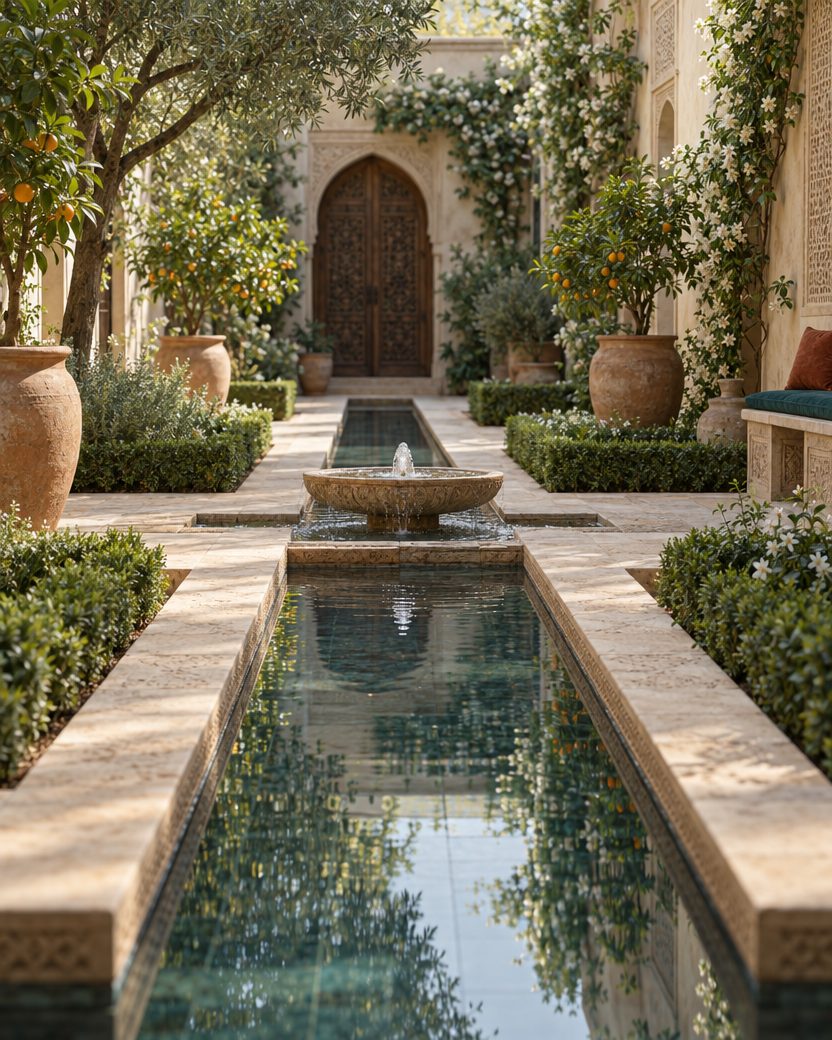
The Persian garden is built on a plan called the chahar bagh. Water channels run through the garden and divide it into four parts, meeting at a central pool. In a hot, dry land, water was everything, so it became the heart of the design.
Our word paradise comes from this tradition. It traces back to an old Persian word meaning walled around. In 2011, UNESCO listed nine historic Persian gardens in Iran together as one World Heritage Site.
Borrow this: let water sit at the centre of your space. Even a small fountain in the middle of a courtyard or a terrace changes the whole mood.
Every garden is a way of holding nature close.
The Mughals: our own garden heritage
The Mughal emperor Babur brought the Persian garden to the subcontinent, and Mughal gardens were built around four things: shade, fruit, fragrance and running water. Lahore has one of the finest. Shah Jahan built the Shalamar Gardens in 1641 and 1642, on three terraces that step down from south to north, with waterfalls, large pools and wide channels of flowing water. UNESCO listed them as a World Heritage Site in 1981, together with the Lahore Fort.
Borrow this: shade, fruit, fragrance and water. A fruit tree in a large terracotta pot, a jasmine on the wall and the sound of water will get you surprisingly close.
Morocco: the courtyard at the heart of the house
A riad is a garden courtyard inside the home. The classic layout is a rectangle split into four by two paved paths, with a fountain where they cross. Moroccan houses face inward, which kept family life private and sheltered from the weather. Their walls were finished in tadelakt plaster, carved stucco and zellij tiles.
Borrow this: turn your home inward. A small inner courtyard, a lightwell or an enclosed balcony can become a private green room.
Japan: the garden of stones
At Ryoanji in Kyoto, there are no flowers at all. Its famous dry garden, called karesansui, is a rectangle of white gravel about 25 by 10 metres, with fifteen stones set in five groups. Moss around the stones is the only green, and the monks rake the gravel every day.
Borrow this: let stone speak. A few well chosen rocks, raked gravel and a little moss can feel calmer than a whole bed of flowers.
China: a whole landscape in a small space
The classical gardens of Suzhou were made inside small city homes. They imitate natural scenery in miniature, with ponds, pavilions and rockeries of Taihu rock built up into little mountains. Most were made in the Ming and Qing dynasties, when the city had as many as 200 gardens. UNESCO listed them in 1997.
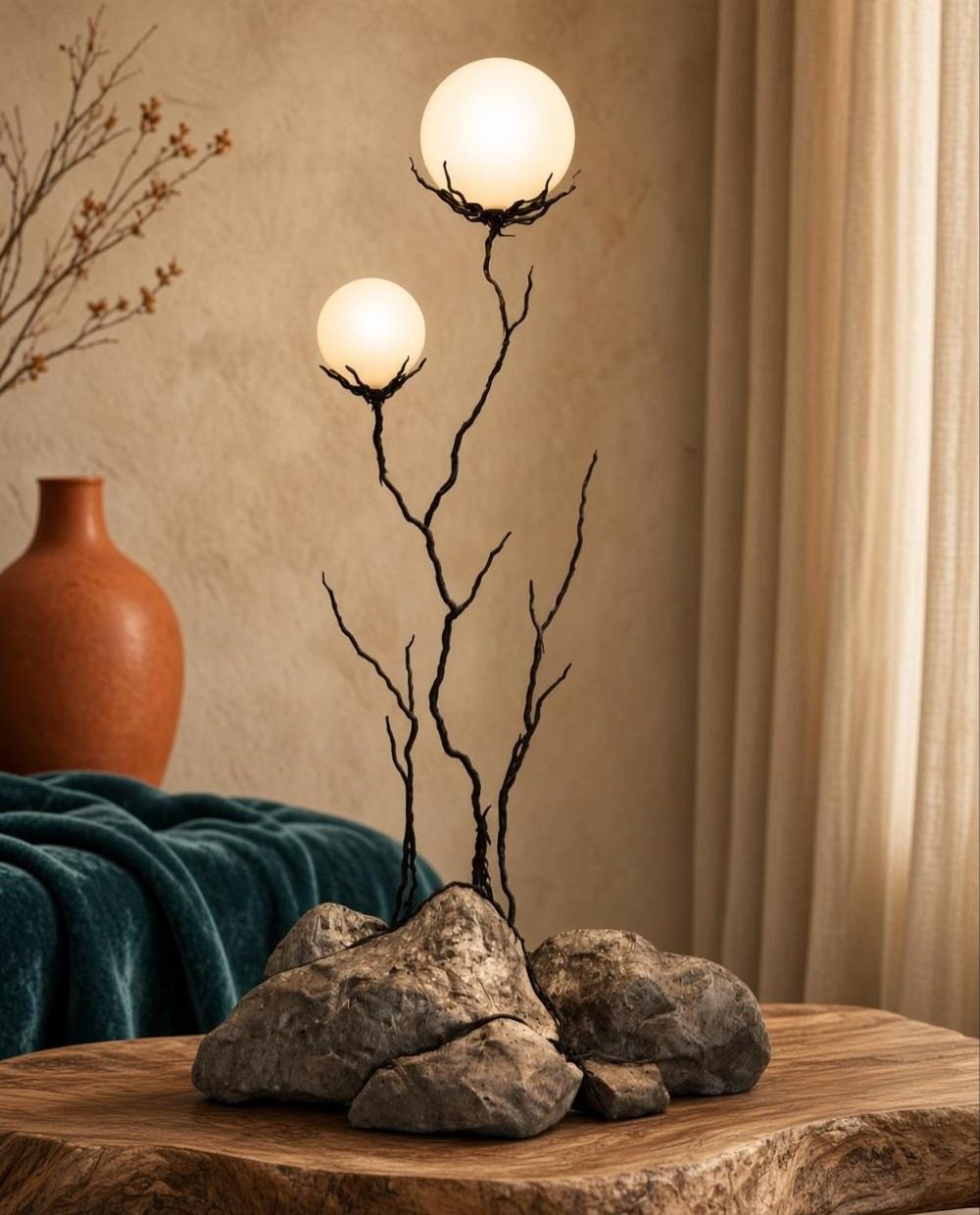
Borrow this: think in miniature. A dish garden, or a corner with one striking rock and a small pool, can feel like a whole landscape.
England: the cottage garden
The cottage garden is the opposite of formal. Flowers, herbs and vegetables are packed closely together, and it is often described as a vegetable garden taken over by flowers. It began as a practical garden for herbs and fruit, then became a fashionable style in England from the 1870s, made popular by writers like William Robinson and Gertrude Jekyll.
Borrow this: mix the useful with the beautiful. Chillies, curry leaves and mint look lovely next to marigolds and periwinkle.
Bringing it home
None of these gardens needs a palace. Each one starts with a simple idea: water at the centre, stones with meaning, plants packed with life, or a quiet corner turned inward. If you would like one of these ideas built into your own corner, send us a photo of your space on WhatsApp and we will plan it with you.
FURTHER READING
- Persian gardens, Wikipedia
- Fort and Shalamar Gardens in Lahore, UNESCO World Heritage Centre
- Riad (architecture), Wikipedia
- Ryoanji, Wikipedia
- Classical Gardens of Suzhou, World Heritage Site
- Cottage garden, Wikipedia
Want help with yours?
Message us on WhatsApp